
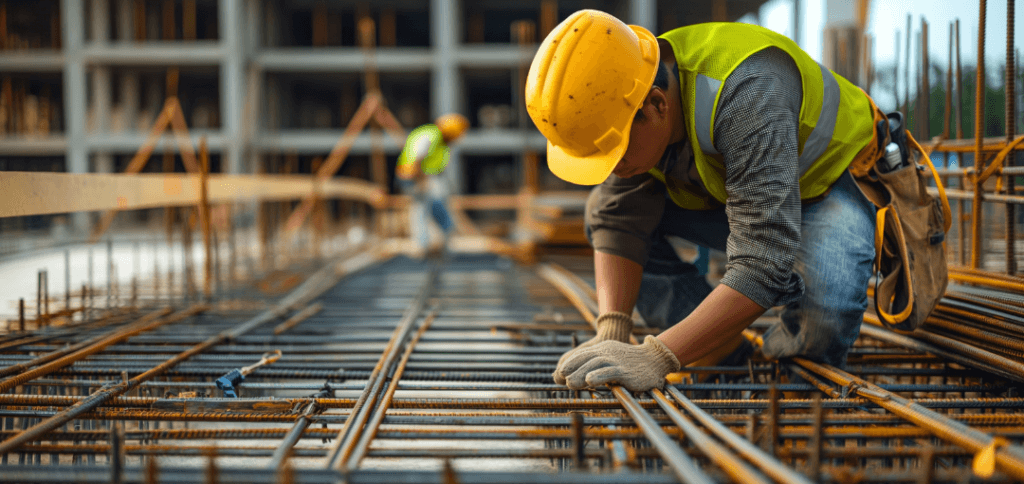
In 2026, construction compliance is shifting from “reactive” to “proactive.” With the federal government implementing stricter oversight on high-hazard industries, your documentation must be sharper than ever.
Construction workers face some of the highest occupational health risks in the U.S., including exposure to excessive noise, respirable crystalline silica, and physically demanding work. These hazards trigger specific OSHA health screening and medical surveillance requirements that employers must meet.
The Cost of Non-Compliance
Failing to meet OSHA standards is not just a safety risk. It is a financial one. As of January 2026, OSHA civil penalties have been adjusted, and the numbers should get the attention of every construction employer in the country.
- Serious Violations: Up to $16,550 per instance.
- Willful or Repeated Violations: Up to $165,514 per instance.
These penalties apply per instance, meaning a single jobsite with multiple violations can quickly result in six-figure fines. The best defense is a proactive, well-documented health screening program.
When Employee Health Screening Is Required
OSHA requires employee health screening when workers are exposed to regulated hazards or perform certain job duties.
Key construction-related requirements include:
- Respiratory Protection (29 CFR 1926.103 / 1910.134)
Medical evaluations are required before respirator use. Fit testing is required at least annually, and whenever respirator type or an employee’s physical condition changes. - Hearing Conservation (29 CFR 1910.95)
Required when noise exposure reaches 85 dBA as an 8-hour time-weighted average, including baseline and annual audiometric testing. When required, it also includes hearing protection, training, and education related to noise hazards. - Respirable Crystalline Silica (29 CFR 1926.1153)
Medical surveillance is required for employees exposed above the action level for 30 or more days per year, including chest X-rays and pulmonary function testing every three years. - New For 2026: Heat Injury & Illness Prevention: Employers must now implement “acclimatization” protocols for new or returning workers and may be required to document medical screenings for those performing high-exertion tasks in extreme temperatures.
Building a “Survey-Ready” Health Program
In 2026, digital recordkeeping is the standard. An inspector will expect to see:
- Baseline Physical Exams: Every heavy equipment operator on your site should have a documented fitness-for-duty evaluation. This is your first line of defense in demonstrating that workers are physically capable of performing their assigned tasks safely.
- Baseline and Annual Hearing Tests: As outlined above, audiometric testing must be conducted at baseline and repeated annually for workers in noise-exposed roles. These records must be maintained and accessible.
- Drug & Alcohol Testing: Your testing panels must be up to date and meet both client requirements and DOT regulations where applicable.
- Record Retention: Under 29 CFR 1910.1020, employers must keep medical evaluations for fit testing for the duration of employment plus 30 years. This is a long-term obligation that requires a reliable, centralized system for storing and retrieving documentation.
How Mobile Health Supports Construction Compliance
Managing multiple crews across different jobsites makes centralized compliance a challenge without the right occupational health partner. When your workforce is spread across different counties, the state, or the country, you need a provider that can meet your workers where they are.
Mobile Health provides:
- On-Site Screening: Mobile Health brings occupational health directly to your jobsite, eliminating travel downtime and keeping your crews productive.
- 6,500+ Clinics: With national coverage through more than 6,500 clinic locations, your dispersed workforce can complete pre-employment and annual testing wherever they are. This is especially valuable for construction companies that operate across multiple states and regions.
- 1.9-Day Average Turnaround: Speed matters in construction. Every day a worker is waiting for medical clearance is a day they are not on the payroll. Mobile Health delivers results in under 48 hours on average, so you can get workers cleared and earning faster.
- Centralized Client Portal: One secure, HIPAA-compliant dashboard to track every medical clearance across all of your jobsites. No more chasing down paperwork or wondering if a worker’s documentation is current. Everything is in one place, access-ready for inspectors.
OSHA compliance in construction is not getting simpler. Between updated penalty structures, new heat illness prevention requirements, and the ongoing demands of respiratory protection, hearing conservation, and silica surveillance, there is a lot to manage. Mobile Health helps construction employers meet OSHA health screening requirements and stay inspection-ready across every jobsite. With on-site screening, rapid turnaround times, a centralized compliance portal, and a nationwide clinic network, Mobile Health makes it possible to keep your workforce compliant without slowing down your projects. Get started with Mobile Health.