
Noise is one of the most common and most overlooked workplace hazards. NIOSH estimates around 22 million U.S. workers are exposed to potentially damaging noise each year. Most employers know they need a hearing conservation program. What trips them up during an OSHA audit is rarely the policy itself, but whether they can prove the program runs the way it is regulated. A program that holds up is built on clear triggers, consistent testing, and documentation you can produce on demand.
When a Hearing Conservation Program Is Required
OSHA hearing conservation programs apply when worker noise exposure equals or exceeds 85 dBA as an 8-hour time-weighted average, often called the action level. Noise monitoring is where every compliant program starts, because it identifies which employees cross that threshold and need to be enrolled. Monitoring also signals when conditions change enough to bring new employees into the program. Without current monitoring data, the rest of the program rests on guesswork, and that is exactly what auditors look for. Mobile Health helps employers keep this testing on track with hearing testing and broader occupational health services that fit your sites and schedules.
The Core Elements OSHA Looks For
A compliant program has five connected parts: exposure monitoring, audiometric testing, hearing protection, employee training, and recordkeeping. During an inspection, auditors check whether each piece is in place and current, not simply whether a written policy exists. The most common findings are not missing programs but missing pieces, such as a training log that stopped two years ago, or audiograms that were never compared to a baseline. Treating these elements as one ongoing program, rather than a set of separate tasks, is what keeps it defensible.
Baseline and Annual Audiometric Testing
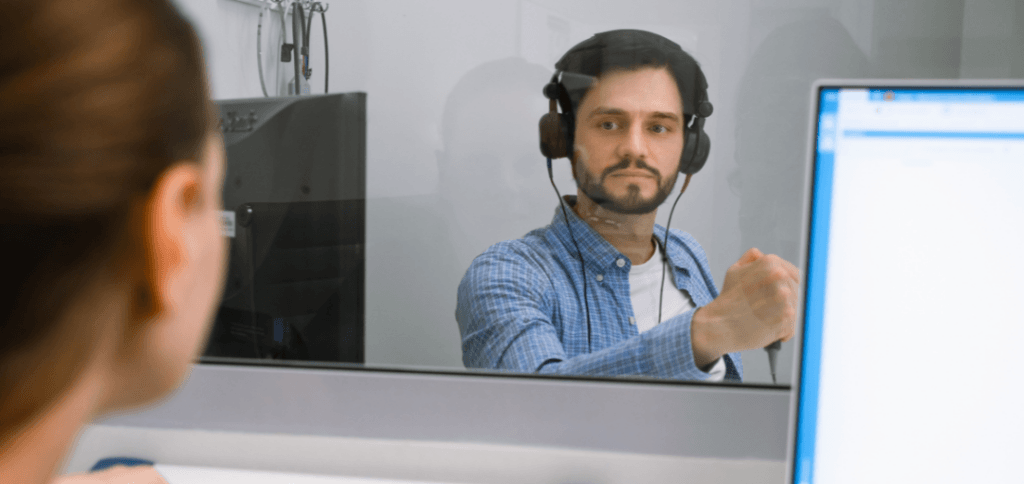
Audiometric testing is the clinical heart of the program. Every enrolled employee needs a baseline audiogram, usually within six months of first exposure, followed by annual audiometric testing measured against that baseline. Those year-over-year comparisons are how you catch a standard threshold shift early and respond before hearing loss progresses. Annual testing is also the step most likely to slip when teams are busy or spread across multiple sites, so a predictable, scheduled approach matters more than any single test.
Hearing Protection and Training
Employees exposed at or above the action level need access to hearing protection and training on how to use it correctly. Training has to be documented and repeated on a regular basis, and the protection offered has to suit the noise levels and the work. This is the part of the program where intent meets reality. Protection sitting unused in a supply closet does not help anyone, and undocumented training does not exist as far as an auditor is concerned.
Keeping Records Audit-Ready
Audits ultimately turn on records. Centralized, current, and accessible documentation is the difference between a routine inspection and a scramble through emails and spreadsheets. The Client Portal keeps baseline and ongoing audiograms organized in one place, which is especially valuable for employers managing hearing conservation across several locations.
Where Testing Happens: Clinic and On-Site
Clinic-based testing works well for steady, individual screening close to where employees live, supported by Mobile Health’s 6,500+ clinic locations. On-site services fit high-volume baselines, annual rounds, tight timelines, and multi-location workforces. The two work best together, not as either-or options.
Talk to Mobile Health to build an OSHA hearing conservation program that keeps employees protected and records audit-ready.