
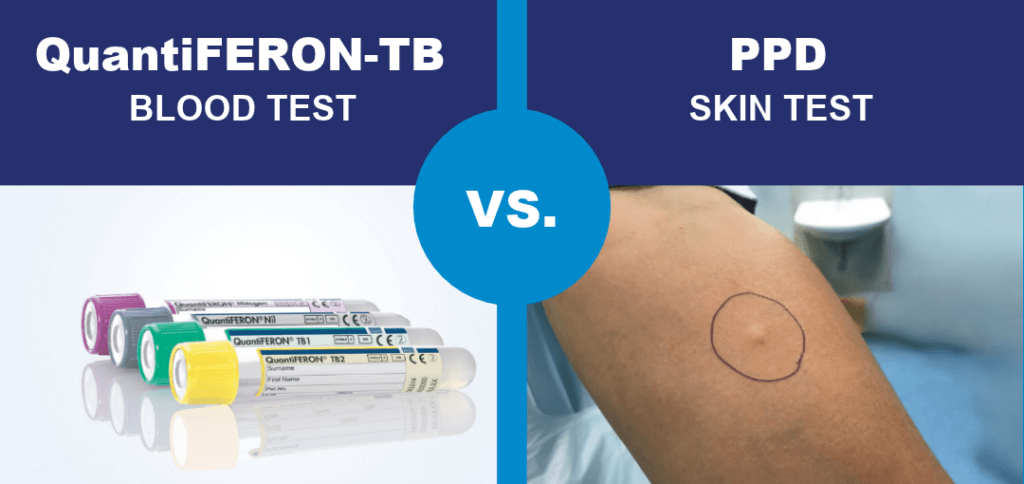
TB screening is a common pre-employment requirement in healthcare, senior living, home care, and education, and the choice is between a TB blood test and PPD skin test. They both screen for TB infection, but each comes with its own practical and medical considerations, from how many visits it takes to a candidate’s vaccination and health history. Choosing the one over the other for your workforce can cut down on scheduling and onboarding delays, and that matters, since GoodTime’s 2026 Hiring Insights Report found scheduling delays were among the top bottlenecks to hiring, cited by 35% of talent teams.
Two Ways to Screen for TB Infection
A PPD skin test, also called a tuberculin skin test, involves a small injection under the skin of the forearm at one appointment. The result has to be read by a trained professional 48 to 72 hours later, which means a second visit. A TB blood test, often called a QuantiFERON-TB test after one widely used brand, is an interferon gamma release assay that needs a single blood draw, with the result processed by a laboratory. Both are accepted methods when an employer requires a TB test for work.
When the Blood Test Is Usually the Better Fit
The blood test needs one visit instead of two, which matters when candidates travel to a clinic or need to start work quickly. It is also the preferred option for people who received the BCG vaccine, since prior BCG vaccination can cause a false positive with a PPD skin test. Employers hiring internationally trained healthcare workers often default to it for that reason. A candidate with a weakened immune system might not be able to provide the proper response to a PPD skin test, making the QuantiFERON-TB blood test preferred. The blood test also suits candidates who may not be able to come back 48 to 72 hours later for the PPD skin test read.
When the PPD Skin Test Still Makes Sense
The PPD skin test remains widely used, often costs less, and works well when the second visit is easy to schedule, such as when a candidate lives near a clinic, or when an on-site team returns to read results for a whole group within the 48- to 72-hour window. Some facilities also specify the skin test for baseline screening at hire, and some use a two-step skin test for new staff.
Neither method is better overall. The right one depends on your workforce, your timeline, and the policies that apply to your facilities.
What a Positive Screen Means Next
A positive result on either test indicates TB infection. A chest x-ray is required to determine whether the TB infection is latent or active. Active TB is symptomatic and can spread to others, while latent TB infection is not contagious. Understanding that a follow-up chest x-ray is required with a positive result keeps the response planned rather than improvised.
Do Employees Need an Annual TB Test?
Not necessarily. CDC guidance generally moved away from routine annual TB testing for all healthcare personnel unless there is a known exposure or ongoing transmission. In practice, TB testing requirements for employers usually mean baseline TB screening at hire, with annual or recurring risk assessments or testing depending on facility policy, state requirements, exposure risk, or setting. Rules for senior living or home care and hospice can differ from hospitals, so confirm what applies to each of your settings rather than defaulting to annual testing everywhere.
Making It Practical at Scale
Clinic-based testing works well for steady individual hiring, with 6,500+ clinic locations putting 77% of employees within 10 miles of one. On-site testing suits annual rounds and larger cohorts, where one team can test a whole group in a single visit. Keeping results in the Client Portal makes the baseline easy to find next cycle, and record-keeping easy to access.
Contact Mobile Health to set up TB screening that matches how and where you hire.